
Friday Top 5 IIoT News Roundup
It’s time to nominate our Friday top five Industrial IoT news articles of the week. Much like the weather in Boulder this week, we couldn’t decide on just one vertical focus, so we cast a wide net of IoT topics. In this week’s roundup, you’ll find a splash of fog computing, manufacturing, smart grid, security and overall IoT updates. Dive in and see if you agree with our picks. Don’t miss the Friday bonus at the end of this short roundup. Making fog computing sensors clearly reliableBy @Patrick_Mannion | Published on @ednmagazinehttp://www.edn.com/design/sensors/4442602/Making-fog-computing-sensors-clearly-reliable“As fog computing rolls in, the onus is upon designers to figure out how much intelligence should be at each node of the system for optimal performance. This implies then that sensors will need to start being more intelligent, with some level of built-in processing, storage, and communications capability.” Army needs wide-area electro-optical sensors for manned and unmanned aircraftBy @jkeller1959 | Published on @IntelligentAerohttp://www.intelligent-aerospace.com/articles/2016/08/ia-wami-sensors.html“Army researchers are interested in moderate-resolution persistent-surveillance electro-optical sensors that operate during the day and at night over large areas to detect vehicles and people on foot. Researchers want to develop a sensor that consists of an imaging sensor, as well as a storage and processing unit.” Five essential IIoT DefinitionsBy @MMS_MattDanford | Published on @MMSOnlinehttp://www.mmsonline.com/blog/post/5-essential-iiot-definitions-“The idea is not just to exchange and collect data, but to act on that data to make things better. (One commonly cited example is a “smart” thermostat.) IIoT is the same concept applied to industry. Examples range from “smart” buildings and power grids to “smart” transportation networks. IIoT might initially take the form of a machine tool status monitoring system.” What makes a grid smart?By David Shadle | Published on @tdworldmaghttp://tdworld.com/grid-opt-smart-grid/what-makes-grid-smart“My point, however, is that the critical consideration is not the number of sensors, controls or data storage components we add to our system when we decide to move ahead with smart grid applications. The focus also needs to be on mastering the integration of these systems, many times across traditional IT and OT lines, to allow them to achieve their potential for intelligence.” Top ten security predictions through 2020By @Gartner_inc | Published on @Forbeshttp://www.forbes.com/sites/gartnergroup/2016/08/18/top-10-security-predictions-through-2020/#4d8ba8073cbe“Through 2018, more than 50% of Internet of Things (IoT) device manufacturers will not be able to address threats from weak authentication practices.” Friday Bonus! FreeWave Technologies announces partnership with Solis Energy By @SolisEnergy and @freewavetech | Published on @SolarNovus http://www.solarnovus.com/freewave-technologies-announces-partnership-with-solis-energy_N10256.html “Both companies are excited about the partnership and are already working through high profile opportunities to take advantage of the growing demand for smart systems and industrial connectivity.”
(Industrialized) IoT App Development
Has IoT app development begun to take the globe by storm? A few weeks ago we discussed the growing need for more third-party app creation for the Industrial IoT industry. This week, we dive deeper and focus on those early adopters of industrialized IoT app development and what industries these “bleeding edgers” are serving. We all know by now the number of connected things is projected to grow massivelyover the coming years. Injecting new software applications into the industrial IoT world creates even more monitoring, control and usage of devices and data at the edge. Some would call this influx of software with industrialized hardware a modern marriage. The manufacturing sector, for example, seems to have found a use for implementing next-generation hardware to improve and automate operations, especially along the assembly line. At the same time, cloud-based software solutions are being leveraged to improve data analytics, thus improving actionable intelligence in real-time. What’s more is this new environment is incentivizing industrial manufacturers to cultivate new business models as they are finding that solutions they have developed in-house are as valuable as the hardware they manufacture. By tracking the performance of manufactured products in the field, manufacturers gain faster feedback loops and insights from customers. For example, instead of waiting months or even years for performance feedback, the integration of cloud-based software and modern hardware provides manufacturers this information in what is approaching real-time. This allows them to respond quickly with fixes, advice or, when needed, replacement equipment. As we enter into uncharted territory for many in this new interoperable, connected tech world, we have to also consider the cybersecurity measures in place and how it will combat any vulnerabilities as the surge of new, industrialized software applications enter our critical infrastructures. Security must be manufactured into the product from the very beginning – this includes tamper-proof hardware, authentication protocols, data encryption and more. What’s Next? Big companies like AT&T and Microsoft are joining forces for the good of the developer. We all can agree software is taking hold of certain business operations, so it is only natural companies would seek an easy solution for enterprise to bring about this change. The industrial side may appear to move slower when it comes to implementation, but that is only because of the various moving parts – machine-to-machine (M2M) devices, sensors and wireless technologies – that must sync with precision without missing a beat. Software is the enabler of this interoperability. So what is the next step in this industrialized development? Jeff Dorsch with Semi Engineering believes that, “Industrial Internet of Things (IIoT) applications proliferate in critical infrastructure, such as the power grid and water supply, the importance of the underlying software and the availability of an open-source platform for app development is coming to the forefront.” This fully-functioning data driven ecosystem will have to decide if open or closed systems are the best for their needs. Google and Apple, for example, have provided internet enabled ecosystems of devices. The problem is that they are closed ecosystems that limit which devices and which data can speak to each other. If industrial players want to take advantage and accelerate their own digital transformations, market opportunities and revenue, then they must take a closer look at open and secure technologies and start innovating for IIoT today. So as we all start to dip our toes in the industrialized software development pond, be sure to consider how your desired outcome matches the factors of delivering business value – customer responsiveness, security, revenue generation and operational efficiency. All are important in and of themselves, but different business models drive different decision-making. Embracing the IIoT app development opportunity early on might prove to be the smartest investment from a competitive advantage standpoint – being able to answer the “why” question is what will eventually separate the high-performers from the rest.
Manufacturing the Future
It’s no secret that the industrial revolution was directly born from the development of specialized machinery, thus providing the means of manufacturing a new path in history. Industrialization marked a societal shift through the development of these new systems, which also opened new ways of doing business. The principles and practices from these transformations continue to have a long-lasting ripple effect on the world today. It may come as a surprise that America manufactures more today than we ever have before in the country’s history. The advancements in manufacturing have spurred the next era of global growth and innovation. As a local manufacturer for the past 20 years in Boulder, Colorado, FreeWave has a unique understanding of how producing goods locally actually improves the bottom line, as compared to sending the work offshore. The Manufacturer is Evolving According to a major report from the McKinsey Global Institute, manufacturing continues to evolve in many ways. Some of the key findings to note were: Manufacturing’s role is changing. The way it contributes to the economy shifts as nations mature: in today’s advanced economies, manufacturing promotes innovation, productivity, and trade more than growth and employment. In these countries, manufacturing also has begun to consume more services and to rely more heavily on them to operate. Manufacturing is not monolithic. It is a diverse sector with five distinct groups of industries, each with specific drivers of success. Manufacturing is entering a dynamic new phase. As a new global consuming class emerges in developing nations, and innovations spark additional demand, global manufacturers will have substantial new opportunities—but in a much more uncertain environment. The report also highlights two very critical priorities for the future: “Companies have to build their R&D capabilities, as well as expertise in data analytics and product design. They will need qualified, computer-savvy factory workers and agile managers for complex global supply chains. In addition to supporting ongoing efforts to improve public education—particularly the teaching of math and analytical skills—policy makers must work with industry and educational institutions to ensure that skills learned in school fit the needs of employers.” IoT and Smart Manufacturing Whether it’s called smart manufacturing, Industry 4.0 or Industrial IoT, even the casual observer of the industrial landscape can see how manufacturing is changing. Being driven by new technologies and rapidly evolving customer demands manufacturers have needed to respond with mass customization – the concept of building flexibility into mass production. Through the adoption of the Internet of Things (IoT), factory and plant settings are becoming more outfitted with advanced instrumentation and being interconnected for a holistic approach to the modern assembly line. IoT provides the ability to gain valuable data off of all the “things” along the manufacturing process. From the condition of assets and equipment to quality and yield metrics, IoT provides live, real-time data from the manufacturing environment to our fingertips. In addition, new data sets (and perhaps more importantly data analytics) are changing the way we see our machines, our processes and our business operations. Analytics can identify patterns in the data, model behaviors of equipment, and predict failures based on a variety of variables that exist in manufacturing. As more factories and equipment are instrumented with the IoT, data volume will only grow larger. In Closing America is still making plenty of “things” and thanks to the latest advancements in technology, is still the leader in many of its fields of expertise. Below is a throwback video from PBS to remind us how the manufacturing sector continues to produce not just products, but ingenuity. Video courtesy of PBS.org
Berg Insight: Bright Days Ahead For Wireless Automation
A recent report published by Berg Insight details the bright future ahead for Industrial IoT through the implementation of wireless automation technologies. Berg Insight senior analyst Johan Svanberg made note that higher levels of automation and IoT solutions enable “shorter lead times, lower inventories, increased throughput as well as more flexibility and the ability to respond faster to changing customer needs.” The wireless IoT device market is served by a multitude of players from various backgrounds including global automation solution providers, automation equipment and solution vendors, industrial communication specialists and IoT communication specialists. This new report from Berg Insight informs us that: 2015 estimate of wireless devices for industrial automation applications reached 4.8 million units worldwide. Wireless devices installed for industrial applications have a forecasted growth rate of 27.7 percent from 14.3 million connections at the end of 2015 to 62.0 million devices by 2021. Key Findings from Berg Insight: Wireless connectivity is instrumental in the Internet of Things era and the use of wireless solutions in industrial automation is increasing rapidly at all levels of automation systems. Industrial automation systems utilize wireless communication to connect remote and local facilities and equipment to increase operational efficiency. A wireless automation system contains a mix of network technologies, equipment and systems including enterprise and automation systems, network equipment, control devices and field devices. The most common wireless technologies in industrial automation include cellular, 802.11.x Wi-Fi, proprietary unlicensed ISM radio, Bluetooth, various LPWAN technologies and 802.15.4 based protocols such as WirelessHART, ISA100.11a and ZigBee. Berg Insight estimates that shipments of wireless devices for industrial automation applications, including both network and automation equipment, reached 4.8 million units worldwide in 2015. Growing at a compound annual growth rate of 25.1 percent, shipments are expected to reach 18.3 million by 2021. The installed base of wireless devices in industrial applications is forecasted to grow at a compound annual growth rate of 27.7 percent from 14.3 million connections at the end of 2015 to 62.0 million devices by 2021. Wi-Fi is widely used for backbone communications as well as in monitoring and control applications within factory automation where Industrial Ethernet has got a strong foothold. Bluetooth is also popular – often as a point-to-point wire-replacement between for example a mobile HMI solution and a field device or control unit. 802.15.4 networks are often used to connect wireless sensors and instrumentation in process automation. Cellular connectivity is typically used for backhaul communication between plants, connecting remote devices in long haul SCADA applications and for third party access to machinery and robots. LPWAN technologies are increasingly used in certain low data, long range applications. Most of the major vendors of wireless IoT devices in industrial automation offer a wide range of devices with various wireless technologies in order to support many different applications. Key Takeaways, According to Berg Insight: Companies are now deepening the integration between industrial automation systems and enterprise applications and the promise of IoT is getting more tangible by the day. Large multinational corporations are beginning to systematically develop and adopt best practices to maximise the benefits of IoT technology in every part of their organisations. IT/OT convergence, smart factories, Industry 4.0 and the Industrial Internet of Things are concepts which are part of the ongoing evolution of industrial automation. Innovation in sensors, wireless connectivity, collaborative robots, big data and cloud solutions along with seamless exchange of information between devices, systems and people paves the way for improved performance, flexibility and responsiveness throughout the enterprise value chain. For more information, read the full report from Berg Insight.
IIoT Top News: Machine Learning
Machine-to-machine (M2M) learning is an integral apart of the expanding world of Industrial IoT. Over the past few months we have given attention to manufacturing and its current digital disruption, but have failed to show the direct impact smart M2M and IoT technology is having on the industry. So, this week we are diving deeper into the term machine learning and how it connects to manufacturing both today and in the future. Before we get to our news round up let’s start by re-defining M2M, to ensure we are all on the same page with its purpose and meaning. Gartner has defined machine-2-machine communications as “something used for automated data transmission and measurement between mechanical or electronic devices.” Now, that we have defined M2M, its time to check out our top news round up for the week on how M2M applies to both manufacturing and IoT. 10 ways machine learning is revolutionizing manufacturing Machine learning is poised to improve manufacturing by streamlining the process of OT and IT, thus increasing efficiency and lowering overall operation costs. Louis Columbus at Forbes believes that “Every manufacturer has the potential to integrate machine learning into their operations and become more competitive by gaining predictive insights into production.” IoT will recharge Machine Manufacturers Manufacturing can look to software companies as an example of how IoT can implement creating a smarter M2M network. Timothy Chou with CFO.com writes, “Today, manufacturers of machines — whether seed drills, chillers, or CT scanners — can leverage the path paved by the software product companies through three new business models: service and support; assisted services and machine-as-a-service.” Climbing the IoT Mountain–by adding M2M to manufacturing Manufacturing is only at the beginning of its ascent into IoT and M2M, so there are many more bumps and obstacles a long the way for the industry to fully integrate. Ronnie Garrett with Supply & Demand Chain Executive describes IoT and M2M manufacturing implementation as, “Standing at the foot of Mount Everest, ready to climb the world’s tallest mountain. You know you want to get to the top but you aren’t really sure how you will get there or what obstacles you’ll encounter along the way.” Cybersecurity is manufacturing’s biggest risk factor Manufacturing needs to continue to add M2M automation and big data analytics to the shop floor, but a threat to the overall industry is manifesting itself in the cybersecurity world. Ian Wright with Engineering.com informs writes, “A new report from BDO indicates that 92 percent of manufacturers cited cybersecurity concerns in their SEC disclosures this year. According to BDO, this represents a 44 percent increase compared to the first Manufacturing Risk Factor report in 2013.” As we wrap up our top news for the week, we realize the need to fully implement advanced machine learning across the manufacturing world will take more than a simple flick of the wrist. With that said, we leave you with a cautionary tale of when automation goes wrong. It was recently discovered an airport in India had an sign translated with automation software which read, “eating carpet strictly prohibited” — of course this was not the translation they had meant to display. Regardless, as we move towards a fully integrated M2M world, we will have to adjust our equations depending our our intended outcome, much like the world is finding with the love/hate of language automation. Hope you have enjoyed this week’s top news, as always tell us your thoughts on M2M and how it might impact your world!
Fog Computing: Answering the IoT Challenge
Fog Computing is being touted as the data communication solution our Internet of Things (IoT) devices are asking for by bringing the power of cloud computing closer to the end user. The fact is, the number of connected devices is going to continue to grow exponentionally. In fact, Gartner predicts that by 2020 IoT will include 26 billion connected things. Consider the impact that amount of data collected and processed will have. The Challenge Naturally, with billions of devices all connected to the cloud for manufacturing, oil and gas, utilities, municipalities and enterprise, to name a few, the data transmission and processing rate is bound to slow down – especially if the current cloud architecture is upheld. Some IoT devices use the cloud to store data long term, where other connected things send data to the cloud to be analyzed and sent back to the devicewith operational instructions. Ahmed Banafa with SemiWiki explains, “As dependence on our newly connected devices increases along with the benefits and uses of a maturing technology, the reliability of the gateways that make the IoT a functional reality must increase and make up-time a near guarantee.” What is Fog Computing? Fog Computing is a term coined by Cisco, that offers a way to analyze the data closer to the IoT device, thus saving valuable milliseconds. It may be hard to believe, but a millisecond has the power to prevent a M2M line shut-down, increase the speed at which power is restored to utilities and prevent an oil rig from leaking, just to name a few. An easy way to visually understand where Fog Computing fits in our IoT world, is by looking at the diagram above. It clearly shows that Fog Computing hangs between the cloud and the device, much like the fog on an early San Francisco morning. Fog Computing operates at the network edge, extending the cloud capabilities closer to the source (IoT device). Each IoT connection works with what’s called Fog Nodes to digest the intelligent data and then coordinate operational next steps, whether that be acting directly and or transmitting results to the cloud. The diagram below covers the types of response times IoT devices face from both Fog Nodes and main cloud locations. Fog Computing Brings Efficiency to Enterprise A recent report by Machina Research highlights the companies that pioneered Fog Computing and those poised to capitalize on the benefits in their near future. These companies are able to collect, protect, transport and control the data via IoT devices at the edge of the network, saving time and creating a more stream-line approach to sending and receiving data efficiently and more securely. Overall, as our need to connect explodes, we will not only need to think about IoT, but also the way in which intelligent data is processed from the critical infrastructure and back to the cloud. Fog Computing will continue to open more efficient channels across our IoT, as long as we allow it.
IoT Top News: Manufacturing Disruption
Industrial IoT continues to cause disruption; not just in manufacturing, but across many other industries as well. In the last few months we’ve been keeping a pulse on the state of digital transformation across the business landscape and have been discovering exciting new implementations of Industrial Internet of Things (IIoT). This week we’re highlighting the disruption Industrial IoT is instigating as product development and lifecycle management continues to evolve. Overcoming Three Key Barriers to Industrial IoT Industrial IoT has the potential to capture data in real-time, leverage big data analytics and streamline efficiency to name a few. So what’s hold back the industry? A major barrier has to do with culture of the operational technology (OT) organizations within the industry. The OT have a risk-averse way of thinking and see change as disruption, “Whereas IT is defined by constant change and innovation, that’s why it’s not unusual to see industrial automation systems in service for decades at a time with little or no change.” Bringing Smart Technology to Old Factories Can be an Industrial-Sized Disruption It sounds amazing to have robotic arms working together with the Industrial IoT. The reality is manufacturing is being disrupted by the implementation of IIoT. Mary Catherine O’Connor with the Wall Street Journal reminds us that, “Often plant managers can’t tell which sensor will most accurately collect the data they want from a machine without a series of test runs—a time-consuming process.” Product-Development Strategies in the IIoT Disruption The key to succeeding with IIoT disruption will be to focus on the new innovation of both product and software for the industry. Machine Design reminds us that, “IIoT is a disruptive force that will shape product-development trends over the next decade and beyond.” Relying on CMM to Keep IIoT’s Disruption Positive All the talk up to this point has been about the negative disruptive impacts IIoT is having on the industry. IIoT has the ability to drastically change manufacturing with a positive level of disruption introduced on the shop-floor. According the the American Machinist positive disruption can happen, “By using coordinate measuring machinery (CMM), machine shops or other manufacturers are able to capture the precise details of the geometry or surface conditions of a workplace. Working within IIoT, those manufacturers then are able to share such data between machines, exchange information between facilities, or with customers or suppliers.” Now we would like to leave you with this quick excerpt from Kevin Ashton, a British technology pioneer who co-founded the Auto-ID Center at the Massachusetts Institute of Technology (MIT) and inventor of the term “the Internet of Things.” How the Internet of Things Disruption Gains Traction – Extreme IoT We hope you have enjoyed this closer look at the disruption Industrial IoT is bringing to the table and what steps are being done to allow more implementation across the industry. Let’s us know what disruption you have seen with IIoT.
IoT Top News: Future is Now
The Internet of Things (IoT) is creeping into every aspect of our lives. With the advent of smart cities, smart manufacturing, precision agriculture, drones and digital energy, businesses and individuals alike have seen the influx of IoT technology. For example, a recent report from Gartner, “suggests that more than 26 billion devices will be connected to the internet by 2020, with 250,000 of them being vehicles.” So, with the billions of connected things, its only natural this week’s top news roundup would highlight how IoT is maturing and what experts see for the future ahead. Research Firm calls for Standardized IoT Deployments As the demand increases to make more smart cities, researchers warn of extra costsand fragmented delays if we don’t create overall IoT standards. Machina Research reports, “Using current non-standardized technologies, it would cost 1.12 trillion dollars to get smart cities up and running by 2025. Were a standardized approach adopted, the total cost would be 781 billion dollars, a savings of 341 billion dollars worldwide.” Is Automation the Key to Unlocking IoT Data? The best approach to implementation is a combination of data analytics with real-time automated wireless results Dave McCarthy senior director of products at Bsquare suggests that, “The goal of any IoT system should be to extract business value from device and sensor data.” Three Ways to Leverage IIoT Some of best ways to leverage Industrial IoT is by learning to adapt machine learning(M2M), embedded sensors and an overall operational shift allowing the wireless technology to be implemented across the business. Scott Stone with Plant Engineering informs us that, “Accenture predicts that vendor-specific and proprietary infrastructure will be replaced over time with interoperable platforms. Harnessing the data through sensor-driven computing, industrial analytics and intelligent machine applications opens the door for innovation.” Internet of Things Offers Vision of the Future IoT is not a new concept, it has actually been around for 30 to 40 years, yet the future of IoT will still be fueled by security and integration concerns as our need to be connected everywhere continues to grow. Basher Saajid with Liberty Voice reminds us that, “Forbes has reported the overall IoT potential to generate additional $10-$15 trillion for the world GDP by 2034.” We hope you enjoyed this quick look at IoT top news, as always tell us about the stories you found of interest!
Robots Will Steal Your Future Paychecks
We’ve spent many words on this blog talking through new Industrial IoT technologies, hardware and software, and the way that the status quo has shifted to demand better connectivity, smarter infrastructure, and better access to real-time data across the spectrum. Where we haven’t spent much time is considering the economic impact these technologies will have on the average person. Without looking too far into the future, we can already see the impact of a more automated workforce. With that in mind, and on top of all our other daily worries, do we need to be worried about robots stealing our paychecks in the future? Eric Brynjolfsson, recently presented a TED Talk about this very topic, but unlike the sci-fi fear mongers, Eric had a different approach. Brynjolfsson suggests we stop trying to compete with machines and focus in on how they can complement our work-life. It’s true today it takes less people to get the job done. This shift to automation is forcing companies to rethink infrastructure and think more about speed, efficiency and overall time. This isn’t the time to reinvent the wheel, it’s time to think about how that wheel can be tweaked to operate more smoothly and consistently over time. Now, before you let your imagination run wild of a robot powered world, that will be lucky to be apart of, take a moment and watch Brynjolfsson’s TED Talk. Not to worry there is still hope, you may not have to hand over your paychecks to tomorrow’s robots, just yet!
Top News: Manufacturing the Fate of Our Digital World
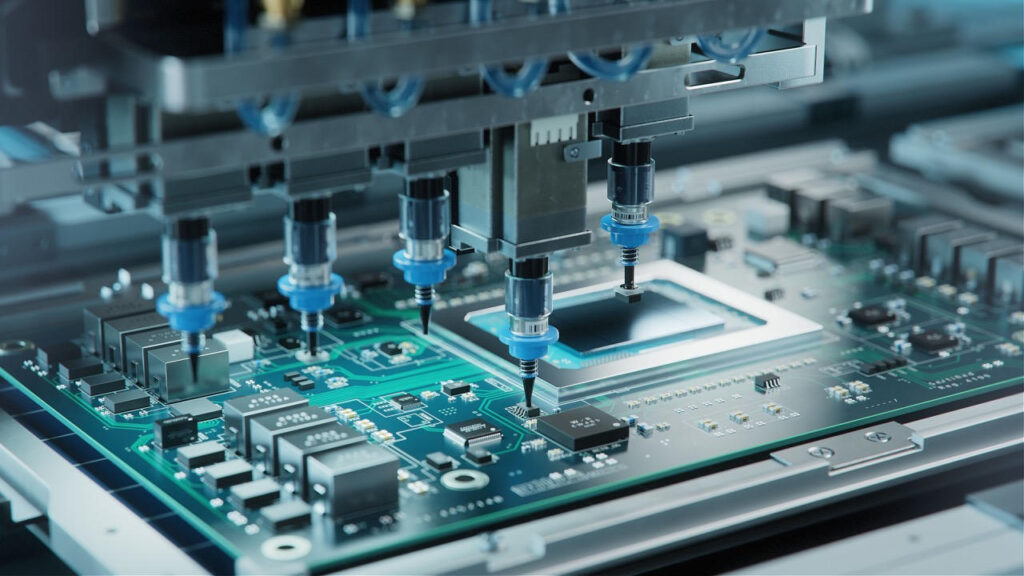
Manufacturing is in the midst reinventing itself on the heels of the latest IoT innovations. The industrial automation paradigm, which some say also gave rise to the lean manufacturing management philosophy, continues to influence organizations that wish to find new ways to capitalize on business opportunities in the digital age. Through that lens we gathered the top articles from the week and found some interesting perspectives. Some reports started suggesting manufacturing is in a time of trouble, both in the U.S. and around the globe, namely in places like China. But upon further investigation, we also find exciting trends that are shaping the evolution of manufacturing. We hope you enjoy this week’s roundup, and be sure to comment on your top articles of the week below! Chinese manufacturing fall adds to evidence of sharp global downturn (The Guardian) As the world watches Chinese manufacturing slow, many believe this is evidence of a major global downturn. The Guardian reminds us all that, “In another sign that manufacturers are braced for a long period of chasing business from a diminishing number of customers, they continued to lower their prices in February.” American Manufacturing in Peril (U.S. News) Gone are the golden days of domestic manufacturing, analysts now believe American manufacturing is in serious trouble. Andrew Soergel with U.S. News suggests that part of the problem for manufacturing is that, “The job market has changed. The generation has changed. The skill requirements to work in factories have changed.” The Manufacturing Side of CPG’s Digital Disruption (Automation World) In this era of digital disruption, consumer buying behavior will impact manufacturing practices. According to Stephanie Neil with Automation World, she thinks manufacturing could benefit from, “The use of standardized, reusable software modules simplifies configuration of robotic movements and integration with machine control functions. This allows machine builders to focus on increasing machine performance, added functionality, and equipment energy efficiency.” Despite all this talk about downturn and disruption in the manufacturing industry, there are some positive trends we should mention as well. Top 10: Manufacturing Trends of 2015 (Manufacturing Global) IoT, nanotechnology, SMAC Stack and greater visibility were all key manufacturing trends last year. According to Manufacturing Global’s trends, “Additive manufacturing, or 3d printing, is big news in the manufacturing sector. The new technology has captured the imagination of the general public and manufacturing executives alike, however it has also proven to be a game-changer for the industry.” 3-D Printing Poised to Shake up US Manufacturing (New York Post) In the last year 3-D printing has shown up in the medicine cabinet, operating rooms and even New York Fashion week. U.S. Manufacturing is getting a serious shake up with the launch of more 3-D printers. Catherine Curan with New York Post states that, “The 3-D printing boom isn’t big enough to single-handedly revive local manufacturing, but it will help.”