
Drone Innovation: Supporting 2016 and Beyond
Drones are an interesting case study in the technology maturation process. Previously only available for military and defense applications, drone use have spread through the industrial and consumer markets faster than nearly anyone, especially the FAA, was prepared for. Despite the regulatory issues that have accompanied this growth, users are finding increasingly innovative and creative applications for the technology. This week, we’ve looked around for drone applications that really caught our eye for the potential long-term implications to the respective industries. Of course, for every example we’ve found, there are hundreds more. Let us know which applications you find most interesting! In case you need a recap, Donald Bell, with CNET highlights five industries that will be dramatically changed by drone use. Now that you are caught up on basics, check out the way drones are poised to save lives in remote areas of Malawi. The biggest problem with testing children in remote areas is the cost to get to the remote area and the time it takes to receive the tests back at a lab for testing. If Malawi is able to substitute drones for the courier service, they will save valuable time and be able to start treating. The Guardian reports that “Working with the government, Unicef is considering using drones to transport medical tests and blood samples from rural clinics to laboratories, avoiding the rutted roads that make even short journeys uncomfortable and unpredictable, partly because of fuel costs and a lack of motorbike drivers.” Drones can save lives, but can they also help us improve the experience on the links? Golf just got a whole lot more interesting in Japan! A new company has created a drone that with one click of your smart phone will bring you more golf balls or a refreshing beverage. What will drones do next? If your answer is, “finally make some of Batman’s crazy tools work in real life,” you would not be far off. Check out this footage from New Scientist of a drone mimic the flexible wings of a bat. Perhaps it’s simply a matter of time before we can strap on our utility belts and batwings and save the world… On the industrial side of things, drones are being used to gather data and infrastructure-related inspections, like bridges. The benefits for this project are twofold: drones could reduce the number of humans needed for the job, and they can also make the job safer by inspecting the more dangerous sections of the bridge. The Minnesota Department of Transportation has also tested the viability of drones for bridge inspections. It’s certainly a viable option that can translate across many industrial applications. Finally, what kind of society would we be if we didn’t begin to prepare our drones for the inevitable future of light sabers and hand-to-hand combat? All jokes aside, teaching drones to have this kind of reaction time to obstacles mid-flight could mean a step forward in some of the concerns about the use of drones in airspaces. For now, though, let’s appreciate this drone-turned-sword-evader. What else is out there? Let us know what you’ve seen around the world with drone applications!
Robots Will Steal Your Future Paychecks
We’ve spent many words on this blog talking through new Industrial IoT technologies, hardware and software, and the way that the status quo has shifted to demand better connectivity, smarter infrastructure, and better access to real-time data across the spectrum. Where we haven’t spent much time is considering the economic impact these technologies will have on the average person. Without looking too far into the future, we can already see the impact of a more automated workforce. With that in mind, and on top of all our other daily worries, do we need to be worried about robots stealing our paychecks in the future? Eric Brynjolfsson, recently presented a TED Talk about this very topic, but unlike the sci-fi fear mongers, Eric had a different approach. Brynjolfsson suggests we stop trying to compete with machines and focus in on how they can complement our work-life. It’s true today it takes less people to get the job done. This shift to automation is forcing companies to rethink infrastructure and think more about speed, efficiency and overall time. This isn’t the time to reinvent the wheel, it’s time to think about how that wheel can be tweaked to operate more smoothly and consistently over time. Now, before you let your imagination run wild of a robot powered world, that will be lucky to be apart of, take a moment and watch Brynjolfsson’s TED Talk. Not to worry there is still hope, you may not have to hand over your paychecks to tomorrow’s robots, just yet!
Who’s Your Betamax of IoT Standards?
Image Courtesy of Flickr Creative Commons In the world of IoT/IIoT an explosion of standards has fallen upon us. While we all can agree that standards are what binds our current communication infrastructures together, it does take time for the victorious standard to rise to the top of adoption. Some of us remember the battle that arose in the video tape arena between VHS and Betamax (https://en.wikipedia.org/wiki/Videotape_format_war). While Betamax’s claim to fame was the superior picture, VHS had the longer recording time and a larger backing from the industry. In the end VHS won. And who can remember the tale of HD-DVD vs Blu-Ray, token-ring vs 10Base-T or WiMax vs LTE? Enter the IoT/IIoT wannabes. In the communication protocol arena we have standards such as 802.15.4 (ZigBee), 802.11ah (Wi-Fi HaLow) and LoRa that want to use the 900 MHz spectrum to connect your devices back to a gateway and then to your cloud. There are also application software framework standards such as Thread, Alljoyn, IoTivity, Arrowhead and LWM2M. I won’t even mention all of the cloud platforms that aim to bring all of these pieces together in one place. Really, how many people think about the actual physical mechanisms that enable connectivity throughout the world? And within that, who thinks about the standards set by organizations that dictate the best method for connecting all our devices? Standards have the potential to affect ranges of communication, battery life on remote devices, signal interference, and many other things. The interesting part about the race to the top, so to speak, is that the standards mentioned above all have viable aspects that could potentially make them the ideal solution for connected infrastructure. Many of these standards have consortiums with major players such as Google, Microsoft, ARM and Samsung, all of which play at different places in the IoT/IIoT theatre. So, unlike the tail of Betamax, many of these standards have the backing of multiple entities. But, who’s going to win? Which standard will come out on top? Or, will we find ourselves with multiple standards because we can’t agree on one to do the job? What do you think? Who is your Betamax pick for IoT/IIoT?
IWCE 2016: What to expect next week?
The International Wireless Communications Expo (IWCE), is an annual event for communication technology professionals working globally in a broad range of the communications field, including energy, utilities, emergency response and municipality/infrastructure. This conference will get under way next week, from March 21-25, in Las Vegas. An estimated 7,000 individual industry experts are expected to attend from government/military; public safety (law enforcement, fire service and first responders); utility, transportation and business enterprise. IWCE will also feature around 370 exhibitors ready to show you the latest product innovations and trends forecasted this coming year. Donny Jackson editor of Urgent Communications, the official tradeshow media partner, believes that this year’s IWCE will give industry professionals a chance to get educated about the latest critical-communications technology, all while making key network contacts with industry experts. So, what else can we look forward to? IWCE promises to offer engaging content–with their 5-day comprehensive conference program; more quality time with peers; industry experts providing the latest strategies and tactics; minimal expenses–when you take advantage of conference discounts; structured networking opportunities; tangible handouts you can use throughout the year; more face-to-face learning time and more educational opportunities will be available this year. Excitement is building! Here are just a few of the people and organizations excited for next week’s event! Tune in next week for our IWCE insider recaps. Vegas here we come!
Top News: Manufacturing the Fate of Our Digital World
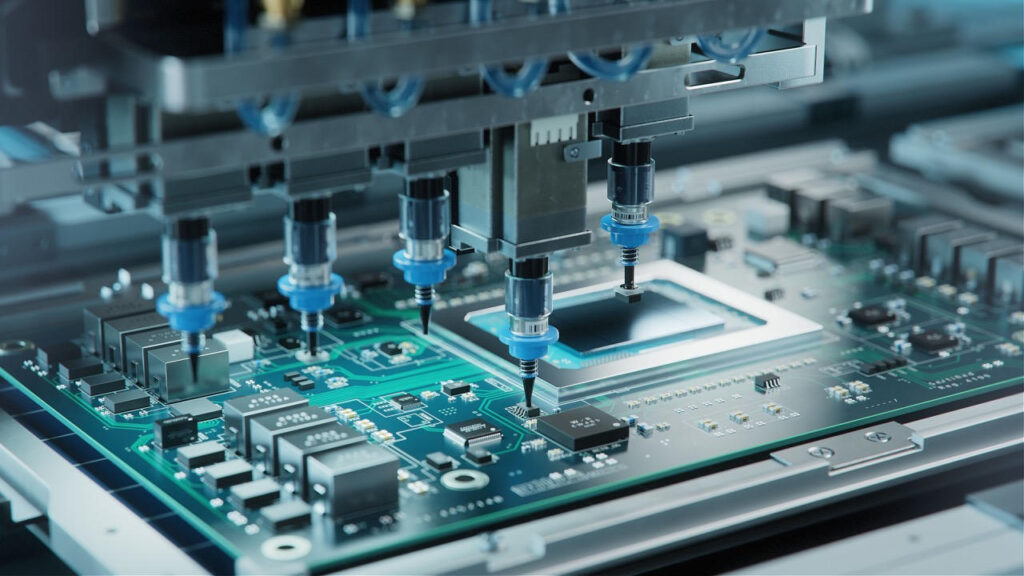
Manufacturing is in the midst reinventing itself on the heels of the latest IoT innovations. The industrial automation paradigm, which some say also gave rise to the lean manufacturing management philosophy, continues to influence organizations that wish to find new ways to capitalize on business opportunities in the digital age. Through that lens we gathered the top articles from the week and found some interesting perspectives. Some reports started suggesting manufacturing is in a time of trouble, both in the U.S. and around the globe, namely in places like China. But upon further investigation, we also find exciting trends that are shaping the evolution of manufacturing. We hope you enjoy this week’s roundup, and be sure to comment on your top articles of the week below! Chinese manufacturing fall adds to evidence of sharp global downturn (The Guardian) As the world watches Chinese manufacturing slow, many believe this is evidence of a major global downturn. The Guardian reminds us all that, “In another sign that manufacturers are braced for a long period of chasing business from a diminishing number of customers, they continued to lower their prices in February.” American Manufacturing in Peril (U.S. News) Gone are the golden days of domestic manufacturing, analysts now believe American manufacturing is in serious trouble. Andrew Soergel with U.S. News suggests that part of the problem for manufacturing is that, “The job market has changed. The generation has changed. The skill requirements to work in factories have changed.” The Manufacturing Side of CPG’s Digital Disruption (Automation World) In this era of digital disruption, consumer buying behavior will impact manufacturing practices. According to Stephanie Neil with Automation World, she thinks manufacturing could benefit from, “The use of standardized, reusable software modules simplifies configuration of robotic movements and integration with machine control functions. This allows machine builders to focus on increasing machine performance, added functionality, and equipment energy efficiency.” Despite all this talk about downturn and disruption in the manufacturing industry, there are some positive trends we should mention as well. Top 10: Manufacturing Trends of 2015 (Manufacturing Global) IoT, nanotechnology, SMAC Stack and greater visibility were all key manufacturing trends last year. According to Manufacturing Global’s trends, “Additive manufacturing, or 3d printing, is big news in the manufacturing sector. The new technology has captured the imagination of the general public and manufacturing executives alike, however it has also proven to be a game-changer for the industry.” 3-D Printing Poised to Shake up US Manufacturing (New York Post) In the last year 3-D printing has shown up in the medicine cabinet, operating rooms and even New York Fashion week. U.S. Manufacturing is getting a serious shake up with the launch of more 3-D printers. Catherine Curan with New York Post states that, “The 3-D printing boom isn’t big enough to single-handedly revive local manufacturing, but it will help.”
Top News: IoT Rules at Mobile World Congress (MWC)
After a week of everything mobile, at least in Barcelona at the Mobile World Congress (MWC), it is only fitting this week’s top news recap focuses on the other three letter acronym so hotly discussed from the show – IoT. Whether you have been living under a rock or just hadn’t embraced the fascination with the latest handheld smart technologies and cellular networking, this week’s Mobile World Congress (MWC) presented by GSMA, brought together around 800 mobile operators from more than 250 companies from around the globe to discuss the latest products, software and innovations that will push the IoT space even further into maturity. Some of the key themes to come out of this year’s MWC were the fifth generation wireless systems or 5G, the impact this next-gen tech and mobile will have on the Internet of Things (IoT) and the booming IoT businesses laying the foundations of the connected world. Now as you nestle up to your favorite mobile device or smart tablet, relax and dive into this week’s IoT news roundup from MWC! MWC: 5G Key to unlocking IoT … Just Not Yet (IndustryWeek) As the MWC surged forward with excitement for 5G to finally unlock IoT, experts warn the connective battle isn’t over, as the world dives into incorporating 5G throughout. Agence France-Presse with Industry Week reports that, “5G is the term on everyone’s lips at the Mobile World Congress in Barcelona and a global race to develop it is under way.” IoT Race Heats up at MWC 2016 (RCR Wireless) The race heats up for IoT, as 2G networks scramble to find a new way to connect with the announcement of 5G at MWC 2016. “Mobile World Congress is all about the newest wireless technologies, but this year the end of an old technology is driving conversations around the Internet of Things.” This Week’s 5G Buzz Indicates IoT is Finally Kick-Starting (VentureBeat) The hot topic on everyone’s mind this week had to be 5G and the need for more IoT connectivity. Leon Hounshell, with Greenwave Systems reminds us that, “Regardless of the hype, CES and MWC do not reveal an IoT revolution, but they certainly show us a determined evolution, where devices will unceasingly become more connected, open, and smart.” Mobile World Congress: Internet of Things Business is Humming (USA TODAY) This week may have shown us a lot of shiny new IoT products for consumers, but the truth is IoT for business will really dominate deal-making. USA TODAY believes that, “It’s not hard to see why. Gartner forecasts that the market for IoT services will top $101 billion this year, nearly 30% more than the $78 billion that businesses spent last year. By 2020, spending for services like network deployment, operations management and data analytics is forecasted to balloon to $257 billion.” Mobile World Congress: Why Every Brand Should Become a Tech Brand (Campaign Live) Connectivity is everything, and moving forward in this technological age the MWC believes all companies should become a tech brand in order to incorporate IoT. Natalie Bell with Campaign Live states that, “We are now in an era of connecting everyone and everything. So, while Mark Zuckerberg is urging us to focus on the former and ensure wider basic connectivity across the entire globe, there’s a huge tech focus on the latter — the Internet of Things, which will be greater enabled by the increasing capacity in 5G. It’s this vast array of connected objects that have caught my attention this year.”
IIoT Top News: Wireless and Wi-Fi
Gone are the days of limited connectivity—at least that’s the plan this year. According to Wireless Design Magazine, The Broadband Alliance has announced plans to hosts a world Wi-Fi-day. This global initiative has teamed up with more than 135 technology companies to help encourage all utilize the IoT and IIoT to its fullest, by taking steps to help business, industry and neighborhoods have access to quality wireless. Now as you reach for your smart device, smart machine or connected thing, hold on tight wireless is taking you to the deep end. Don’t worry you can handle it. Enjoy this week’s reading, and as always tell us what we missed! Army Command Post Gets Secure Gigabit Wi-Fi (GCN) The army is hoping to save countless hours tearing down wired battle systems networks with a new secure gigabit Wi-Fi. Mark Pomerleau with GCN reports that “Wireless capability speeds that configuration, improves troop mobility and provides greater flexibility for commanders.” Subsea Fiber Optic Networks: Past, Present and Future (RCR Wireless News) In this interconnected world, it is amazing to think about the amount of subsea fiber optic networks connecting the planet today, tomorrow and yesterday. Joey Jackson with RCR Wireless News reminds us all that “Subsea fiber optic networks are responsible for the transmission of 90% of the world’s international data.” Type With Your Brain: Future Tech Ditches Keyboard (Discovery News) The future of wireless could allow you to get rid of the keyboard all together and simply type with your brain. Eric Niiler, with Discovery News, tells us that “Scientists are already working on technology that connects the brain to electronic gadgets and two new devices unveiled this week could help usher in a future without keyboards: a wireless brainwave headset and a brain sensor that dissolves in the body after completing its job.” The Future of Wireless Technology is Coming at Light Speed (The Telegraph) One hundred times faster than Wi-Fi, the future of wireless is expected to reach light speed. Rob Waugh with the Telegraph believes that “The speed boost will come from an unlikely source: the lighting above your head. Instead of Wi-Fi radio aerials beaming data through buildings to your laptop, computer-controlled LED bulbs will flicker above your head, beaming out signals like a super-fast Morse code.” The Future of Public Wi-Fi: What To Do Before Using Free, Fast Hot Spots (Wall Street Journal) Setting up an office on the sidewalk isn’t a realistic option year-round, but change is coming. It is good to know what to do before you jump on that free public Wi-Fi.Joanna Stern with the Wall Street Journal informs us, “Wi-Fi networks with widespread coverage and new standards are popping up to allow us to cut back on paying the carriers an arm and a leg for cellular data.”
Can You Hear Me Now? Remote Wi-Fi in the Connected World
(Image courtesy of Tony Webster, via Flickr Creative Commons) One of the more fascinating aspects of our eternal march toward ‘the future’ is the occasional, but impacting, intersection of our critical infrastructure and the general consumer. Like a sine wave across the axis, our connected world meets at points in time that catalyze technological explosions. The transition of computers from behemoth industrial-sized calculators into the first iteration of the personal computer is a good, somewhat recent example. So is the Internet. Each of those began as a fairly raw tool used for enterprise industrial services before intersecting with the consumer and birthing new innovations and applications.Today, the connected world on the horizon, envisioned by dreamers and pragmatists alike, is taking form on the backbone of wireless connectivity in a way that has the ability to impact our critical industries, our smart cities, our homes and our daily lives like never before. Remote Wi-Fi is a tool that has enabled connectivity and data transport for industries like oil and gas, precision agriculture, utilities and seismic monitoring, leading to a boom in the use of predictive analytics to better streamline the work processes in the field for these traditionally remote areas. However, two of the main problems with traditional remote wi-fi network deployment are the security of these networks, as well as the latency of the data transmission. To combat this, these industries have turned to the use of shorthaul (between 1-5 miles) wi-fi hotspots to utilize built-in security measures and decrease latency for data-intensive applications like voice, video, data and sensor connectivity. As a result, these industries have been better able to collect and transport data throughout an entire smart ecosystem, affecting everything from decision-making in the field, to the way the consumer can track personalized utility usage. Our smart cities and municipalities depend on data collected remotely to anticipate infrastructure-related resiliency issues, like grid outages, seismic events and disaster preparedness. Companies in these industries depend on remote data to solve production, maintenance and transport problems. Wi-Fi Will Save the Connected World In early January, the Wi-Fi Alliance, a worldwide network of companies trying to standardize global Wi-Fi provision, announced a new protocol that promises to trigger changes throughout the industrial landscape. Wi-Fi HaLow, as it is called, is an addendum to the IEEE 802.11ah protocol that is set to be finalized later in 2016. HaLow operates in frequencies below 1 GHz and can potentially provide a longer range than Wi-Fi has traditionally offered. The implications for remote Wi-Fi and the Industrial Internet of Things are huge. The addendum means more efficient battery usage due to operating on a lower frequency and with a lower data rate, which, in turn means a greater range and lower transmission power. This standard is still awaiting a final vote, so before we anoint HaLow as the magic bullet for which the Internet of Things has been waiting, the IEEE standards committee will have its say. To come full circle, the potential advent of better long-range Wi-Fi in remote settings could be the next intersection of the axis and the sine wave, enabling innovation and growth at both the industrial and consumer levels of connected-world technology.
IIoT Top News: CES 2016 & the Fate of IoT
All eyes appeared to be on the Consumer Electronics Show (CES) 2016 in Las Vegas since last week, as more than 3,600 companies unveiled the IoT and IIoT innovations we can all expect to see in the coming year. This year’s CES showcased plans to make the car a complete mobile office—with technology in place to allow Skype calls and the use of Microsoft 365 from the car. The other hot theme at CES was drones – not a surprise since these unmanned crafts have pulled us in like a tracker-beam to the mother ship. The autonomous ‘copter drone was one of the most impressive releases with the reality that the businessman of tomorrow doesn’t need a private jet, just a ‘copter drone and a smart phone. Now, as we watched all the products rolled out for their various purposes, it seems we have more connected things to add to an already expansive connected world. How will IoT connectivity technologies weather the storm as demand continues to skyrocket? According to IDC Research, IoT is about to take center stage by globally growing from $656 billion in 2014 to $1.7 trillion by 2020. The buzzwords of 2016 and beyond, IoT and IIoT specifically, simply show we are moving to an “everything is connected” environment. Naturally, once the luster of a shiny new thing wears off, we are tasked with the goal of protecting a critical piece of the IoT world – the data. Businesses need to make sure they are keeping information safe and secure. In this digital innovation age, plenty of industries (and therefore technologies) can’t afford a hack or cybersecurity breach at any time, for fear of customer loss. Companies need to trust their digital information infrastructure will be not only be safe, but also high-performing – or they could very well risk extinction altogether. This week’s IIoT top news post takes another look at the fate of IIoT, as many new “connected things” hit the market this year. Hope you enjoy this week’s recap, and as always, tell us what we missed! Enterprise IoT Projects Will Be Costly, Lengthy and Vulnerable, Says Gartner (Computer Weekly) As the IIoT continues to inhabit day-to-day life, it’s not a surprise that, fifty percent of businesses will use some form of IoT systems by the year 2020. Gartner states that, “By 2020, addressing the black market and other compromises around IoT security will push overall security budgets up, with IoT costs expected to account for twenty percent of annual security budgets, compared with one percent in 2015.” Does Anyone Really Care About the Internet of Things? (Forbes) In this latest article by Forbes, Todd Hixon claims the term IoT was coined 17 years agoand he is still waiting for the killer ultimate app to come out. Hixon further suggests that when it comes to IoT, “Most of the time people prefer to ignore security and focus on more immediate needs and wants.” CES 2016 Takeaways: IoT Could Be the Death of Your Security Network (Network World) The real takeaway from CES 2016 is the overall lack of security for all these new IoT gadgets entering the market and how they fit into the IIoT ecosystem. Tom Henderson, from Network World believes the fate of IoT after CES is that “The damage, the damnation, the truculent total churl of the event was this: all of the new Internet of Thingies/IoT/KewlGear has no cohesive security strategy.” The Internet of Things: Hyped But Here to Stay (USA Today Tech) As the magnitude of connected things get ready for their clos-up, it would appear all the hype for IoT is here to stay. Edward Baig, with USA Today reports that, “You couldn’t walk around CES this week without hearing about or bumping into products related in some way to IoT, the tech industry’s inelegant way of describing all things connected.” What’s Next for the Internet of Things? (TECHCO) Sensors, software, electronic devices and M2M have taken over our daily lives. So, what’s next for IoT? Monoka Jha, with Tech.CO thinks the industry plan needs, “To use the Internet of Things optimally, we need to connect a device to different industries through varied media. For that to happen, the different industries need to have a common physical medium.”
IIoT Top News: 2015 News Round-Up
Let’s take a moment and appreciate the excitement 2015 brought for the IIoT: As we look back at the top articles from the year, we were intrigued to learn that cooperative utilities actually have the largest penetration of smart grid meters per percentage of customers, according to Greentech Media and the U.S. Energy Information Administration. It’s interesting to see the largest publicly-owned utility companies in the U.S. are not the leader in deploying smart meter systems. Another topic that caught our eye this year focused on big data initiatives and how they will improve operational efficiencies by the large-scale storage and transfer of volumes of information safely and securely. Companies don’t always see the value in updating information governance policies because there isn’t always a direct reward and no direct penalty for non-compliance. Tim Jennings, Ovum chief research officer, believes as big data continues to grow within the company infrastructure, it is time to consider the security, availability, and time spent storing data. Speaking of Big Data… It is hard to grasp the magnitude of data transferred throughout the cloud. Today, as big data goes to work, it is transforming industrial facilities, and as Forbes states, “they have grown increasingly complex and yes, every machine, every pipeline, every transmission point collects data ready to be read.” Of course, a 2015 news review would not be complete without at least one mention of unmanned systems. Whether the want/need was for industrial, commercial or government applications, the thing on everyone’s mind was how many cool ways this technology could be deployed in the future. While there were many examples to choose from, DARPA certainly caught a lot of attention from its new autonomous submarine-hunting ocean drone. Yes, you read that right! Finally, as we ease our way into 2016, we would like to share the rest of the top technology and IIoT stories from 2015. This year’s round-up highlights articles about: utilities, manufacturing, oil and gas, wireless, big data, security, drones and industry analyst perspectives. Hope you enjoy this week’s roundup, and as always, tell us what we missed! Energy Six Ways IoT Enables Innovation in the Energy Industry (IT World Canada) The energy industry is learning to use IoT to its advantage. IT World Canada details six ways IoT is enabling innovation and improving overall cost and efficiency for the industry. Yogi Schulz with IT World Canada believes that “Applying these IoT advances to a range of energy industry problems will be a major factor in helping the industry return to profitability in the new, lower commodity price environment through innovation based on better data.” Manufacturing Machine Learning (The Economist) As manufacturing becomes digitized, the industry has to adjust from being a product-focused world to a services market, with smart machines installed on the shop floor. The Economist believes that “For many manufacturers—in Germany and beyond—the principal sticking-point in making this digital leap is often cultural.” Manufacturing’s Digital Future (Industry Week) The digital future of manufacturing will incorporate the data analytics, cloud and many other wireless IoT solutions. Industry Week believes “many companies are leveraging interconnectivity to improve their own factory productivity, the factory-floor blocking and tackling of reducing downtime, cutting costs, reducing cycle time, improving OEE, etc.” Oil and Gas In the Digital Oilfield, “No Wires is a No-Brainer (World Oil) With the digital progression of our world, it seems only fitting we would find IoT in the oilfield. The question we must ask is: “Why, in 2015, has wireless I/O not overtaken hardwired infrastructure as the industry standard throughout the OFS sector?” Big Data Internet of Things Transforming Oil and Gas Operations (RigZone) Analytical movement has increased as the cost of oil continues to drop, therefore forcing the oil industry to gravitate toward more big data and IoT. It has been said, “the amount of data generated by oil and gas operations is starting to explode as real-time information from sensors is being collected at a rate of four milliseconds.” Wireless Tech Darpa’s RadioMap Detects RF Spectrum Congestion (GCN) An interconnected connected wireless world has created congested airways, thus making military communication and intelligence gathering requiring radio frequencies be managed. “RadioMap adds value to existing radios, jammers and other RF electronic equipment used by our military forces in the field,” said John Chapin, DARPA program manager. Big Data The Ethics of Big Data (Tech.Co) Big data has been defined as information that has been either unstructured or multi-structured as way to transform data into value. Once you have given value to the data, it is important to realize who owns the data. Tech.CO says that “when it comes to big data ethics, privacy is not necessarily dead, shared information can still have a reasonable degree of confidentially, but big data can still compromise identity and other information that customers and businesses prefer to be confidential.” Security IoT Security Needs to Stop Being an Afterthought (PCR) In the age of smart homes and smart devices it is time to improve the IoT security across the board. The Internet Society (ISOC) recently released a white paper stating, “the vendors who use IoT should take more responsibility for the security issues that can occur with IoT products.” Drones Robo-Bulldozers Guided By Drones Are Helping Ease Japan’s Labor Shortage (The Verge) Komatsu had to find a way to complete construction projects, as Japan gets closer to the 2020 Olympics. The aging population makes it hard to find anyone able to complete the work. The fix Komatsu has found is to offer a service called Smart Construction where, “a team of robotic vehicles scoops rock and pushes dirt without a human behind the wheel. They are guided in their work by a fleet of drones, which map the area in three dimensions and update the data in real time to track how the massive volumes of soil and cement are moving around the site.” Deforestation: British Firm Developing Tree-Planting Drone to Counter Industrial-Scale Logging (The Independent) A British engineering company is hoping to get international backing for an automated tree planting drone system. The purpose of these drone planting fleet’s, would be not